Above Sheetal Rawal. Scientist (human genetics) & Founder of Apsara Skin Care.
Which Oil Is the Best Choice for Your Skin Type and Goals?
Natural oils have been used for generations to keep skin soft, resilient, balanced, and beautifully nourished. Across Ayurveda and other traditional systems of beauty, oils have never been viewed as interchangeable. Each has its own character: some are rich and replenishing, some are light and balancing, and others are prized for renewing the appearance of damaged or uneven skin.
The key is choosing the oil that matches what your skin actually needs. Here are five excellent choices for five very different skin concerns.
1. Aging & Maturing Skin: Wheat Germ Oil
For aging and maturing skin, wheat germ oil is one of the richest and most nourishing choices you can make.
Maturing skin needs more than surface moisture. It needs oils that replenish the lipid-rich environment that helps skin remain supple, comfortable, and resilient. Wheat germ oil is particularly valuable because it is naturally abundant in vitamin E and essential fatty acids.
Vitamin E is a powerful antioxidant and has long made wheat germ oil a treasured ingredient for skin exposed to environmental stress and the visible effects of aging. Its rich fatty-acid profile also makes it especially suitable for skin that has become thinner, drier, or less supple with time.
This isn't the lightest oil—and that's precisely the point. Mature skin often benefits from something substantial.
Best choice: Wheat germ oil for deeply nourished, supple, more resilient-looking mature skin.

2. Skin Prone to Dark Spots, Scars & Blemishes: Rosehip Oil
When uneven tone, lingering blemish marks, or the appearance of scars is the primary concern, choose rosehip oil.
Rosehip has earned its reputation as a remarkable skin-renewing oil. It is naturally rich in essential fatty acids and contains naturally occurring vitamin A compounds, making it particularly well suited to skin that needs visible renewal.
Rather than relying on an aggressive approach to resurfacing, rosehip oil nourishes the skin while encouraging a fresher, smoother-looking surface. With consistent use, it is an excellent choice for improving the appearance of uneven tone, dark spots, blemish marks, and textural irregularities.
For skin that looks as though it needs to shed its past and reveal something fresher underneath, rosehip is the oil to reach for.
Best choice: Rosehip oil for renewal, uneven tone, dark spots, scars, and blemish marks.

3. Dry Skin: Evening Primrose Oil
Dry skin is asking for nourishment. Evening primrose oil is an exceptional answer.
Rich in essential fats, particularly gamma-linolenic acid, evening primrose oil provides the kind of lipid nourishment dry skin craves. It also brings naturally occurring antioxidants to the skin, making it a beautifully restorative oil when the complexion feels depleted, rough, tight, or uncomfortable.
Hydration and nourishment also belong together. When skin is properly nourished with essential fats, it is better equipped to hold onto the moisture it needs. The result is skin that feels softer, smoother, more comfortable, and less persistently dry.
Best choice: Evening primrose oil for dry, depleted, moisture-starved skin.

4. Combination Skin: Grapeseed Oil
Combination skin requires restraint. If some areas feel oily while others need nourishment, a very rich oil can simply be too much.
Grapeseed oil is the ideal middle ground.
It has a remarkably lightweight feel while still supplying valuable fatty acids and antioxidant nourishment. It absorbs readily and leaves the skin feeling conditioned without the dense, coated sensation associated with heavier oils.
That makes grapeseed especially useful when your skin needs nourishment but you don't want to overwhelm oilier areas of the face.
Best choice: Grapeseed oil for lightweight nourishment and balanced-feeling combination skin.

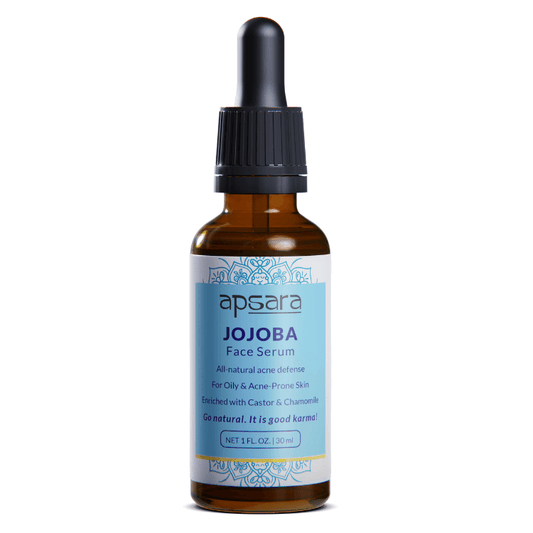
5. Acne-Prone & Oily Skin: Jojoba Oil
Yes, oily skin can—and should—use the right oil. Jojoba is the standout choice.
What makes jojoba so special is that it behaves differently from many traditional plant oils. Its composition closely resembles the skin's own sebum, giving it an extraordinary affinity with the skin.
Jojoba penetrates beautifully, helps loosen and lift oil-soluble impurities from the skin and pores, and provides nourishment without the heaviness acne-prone skin generally doesn't want. Rather than stripping oily skin in an attempt to make it behave, jojoba works with its natural oil environment.
This makes it particularly valuable for a complexion that is simultaneously oily, congested, and in need of proper nourishment.
Best choice: Jojoba oil for oily, congested, blemish-prone skin.

Choose Your Oil With Purpose
The traditional wisdom surrounding botanical oils is wonderfully practical: don't simply put oil on your skin—choose the right oil for your skin.
Maturing skin? Reach for wheat germ. Dark spots and blemish marks? Rosehip. Dryness? Evening primrose. Combination skin? Grapeseed. Oily or acne-prone skin? Jojoba.
Your skin doesn't need every oil. It needs the right one.