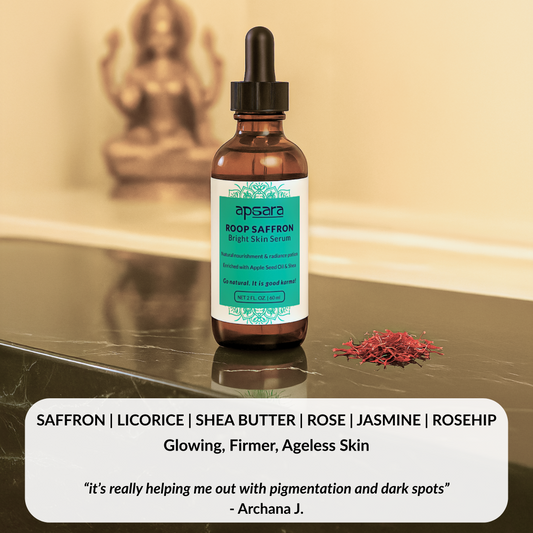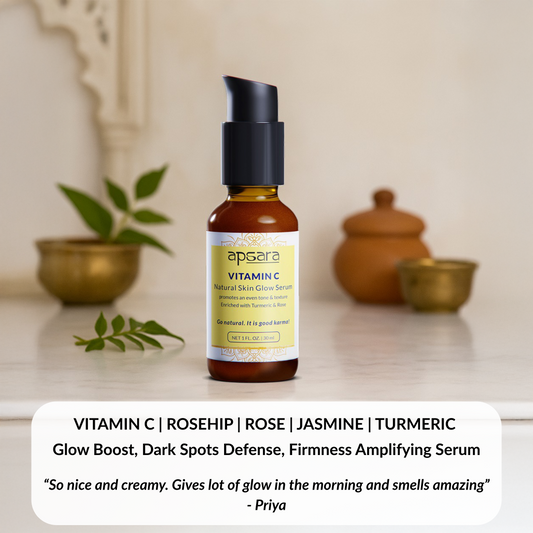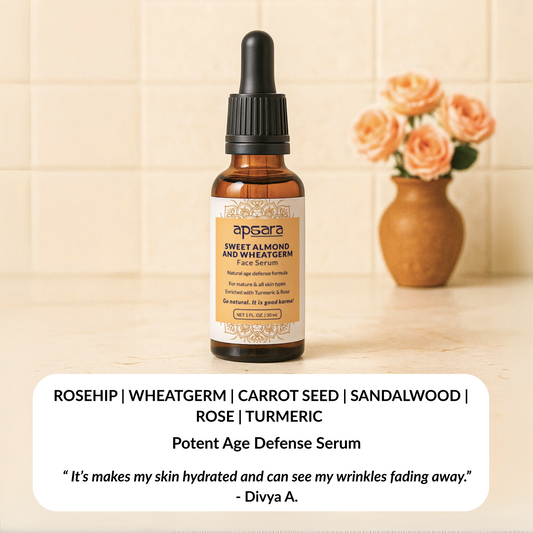
Above Sheetal Rawal. Scientist (human genetics) & Founder of Apsara Skin Care.
Ashwagandha benefits to lower stress, cortisol and to keep the skin younger protected from rapid lines, wrinkles & sagging
At the end of this post, I’ll tell you how I take my ashwagandha.
Stress can influence far more than the way you feel in a difficult moment. When it becomes persistent, it may affect sleep, energy, emotional resilience, and even the way the skin looks and functions. That is why a complete approach to beauty should not focus only on what we apply externally. Supporting inner well-being can be an equally meaningful part of caring for a healthy-looking complexion.
One Ayurvedic herb has become especially well known for this purpose: ashwagandha. Also known by its botanical name, Withania somnifera, ashwagandha has been used in traditional Ayurvedic practices for thousands of years. Today, researchers are studying its potential role in supporting stress balance and sleep, although the evidence is still developing and varies according to the preparation used.
For me, ashwagandha has been part of my personal self-care routine for years. I appreciate the sense of balance and groundedness it brings to my day. But before exploring how I personally take it, let us look more closely at the most relevant ashwagandha benefits, what research says about cortisol, and why stress management matters for healthy-looking skin that does not develop lines, wrinkles and rapid skin aging.

What Is Ashwagandha?
Ashwagandha is an evergreen shrub traditionally found in areas of India, Africa, and the Middle East. Its roots and leaves contain naturally occurring compounds known as withanolides, which researchers have associated with antioxidant and anti-inflammatory activity. Most modern ashwagandha supplements contain the root, the leaf, or a standardized extract made from one or both parts of the plant.
In Ayurveda, ashwagandha is often classified as a rasayana, a category of botanicals traditionally associated with vitality, restoration, and resilience. It is also frequently described today as an adaptogenic herb. The word “adaptogen” is commonly used for substances believed to help the body respond more effectively to physical or emotional demands.
However, it is important to understand that different products are not necessarily interchangeable. A concentrated standardized extract, a capsule, and traditional organic ashwagandha powder may provide different amounts and profiles of active compounds. Results observed with one specific preparation cannot automatically be applied to every ashwagandha supplement on the market.

Ashwagandha benefits for stress support
Among all the proposed ashwagandha benefits, stress support currently has some of the strongest human research behind it. The National Center for Complementary and Integrative Health reports that certain ashwagandha preparations may be helpful for stress and insomnia. At the same time, many existing trials have been small and have used different formulations and dosages, making broad conclusions difficult.
Stress itself is not always harmful. A short-term stress response can help us react quickly, concentrate, or manage a demanding situation. The concern is chronic stress—the kind that continues without allowing the body sufficient time to rest and return to balance.
Cortisol is one of the primary hormones involved in the body’s stress response. It plays important roles in energy regulation, inflammation, metabolism, and the sleep-wake cycle. Cortisol is therefore not a “bad” hormone that should be eliminated. The goal is healthy regulation rather than forcing cortisol to remain permanently low.
Some controlled clinical studies suggest that ashwagandha extract may support this regulation in adults experiencing stress. In a 60-day randomized, double-blind, placebo-controlled trial, participants received either a placebo or 300 milligrams of a concentrated full-spectrum ashwagandha root extract twice daily. The ashwagandha group showed a statistically significant reduction in serum cortisol compared with the placebo group.
The widely repeated statement that ashwagandha can reduce cortisol by “about 30%” comes largely from this study. Researchers reported a 27.9% reduction from baseline in the group using the studied extract. This is encouraging, but it should not be interpreted as a guaranteed result for every person or every form of ashwagandha.

Why chronic stress can cause fine lines, wrinkles, and rapid skin aging
What does stress have to do with your complexion?
The skin is not separate from the rest of the body. It responds to hormones, sleep patterns, nutrition, emotional strain, and environmental exposure. When the body experiences repeated psychological stress, the skin’s protective barrier may not recover as efficiently.
Human research has found that psychological stress can delay skin-barrier recovery after mild disruption. Other research has observed increased morning cortisol alongside deterioration in skin-barrier function during periods of psychological stress.
A well-functioning barrier helps the skin retain water and remain protected from outside irritants. When that barrier is compromised, the complexion may feel drier, rougher, or more sensitive. It may also appear less rested and radiant.
Stress hormones may influence structural components of the skin as well. Research involving glucocorticoids—the family of hormones that includes cortisol—has shown that prolonged exposure can suppress the production of type I and type III collagen in human skin. Collagen contributes to the skin’s structure, firmness, and smooth appearance.
This does not mean that an occasional stressful week immediately causes visible aging, nor does it mean that taking ashwagandha directly rebuilds collagen or erases wrinkles. The relationship is more indirect and complex.
Persistent stress may place additional pressure on the processes that support barrier recovery, moisture retention, and structural integrity. Therefore, reducing daily stress and strengthening emotional resilience may form part of a broader strategy for healthy aging and maintaining refreshed-looking skin.

Ashwagandha, cortisol, and rapid skin aging
Healthy aging is not the same as trying to stop time. It means supporting the systems that help the body remain resilient, rested, and balanced as the years pass.
That includes regular sleep, nutritious food, movement, supportive relationships, sun protection, and a consistent skincare routine. Stress management belongs on that list too.
One of the most meaningful potential ashwagandha benefits is that it may help some people feel better equipped to handle everyday demands. In studies, certain extracts have been associated with improvements in perceived stress, cortisol measurements, and sleep-related outcomes. Still, the results depend on the exact extract, amount, duration, and characteristics of the study participants.
Supporting a more balanced stress response may indirectly benefit skin appearance by encouraging better rest and reducing the burden of ongoing physiological stress. This is why I consider inner well-being an essential part of natural skincare.
A serum or lotion can support the surface of the skin, but it cannot replace sleep, nourishment, emotional care, or moments of true rest. Ayurveda encourages us to look at the whole person rather than isolating one visible concern.

Is Ashwagandha an antioxidant herb?
Ashwagandha contains withanolides and other bioactive compounds that have demonstrated antioxidant and anti-inflammatory activity in laboratory research. This helps explain why the herb continues to attract scientific interest.
However, laboratory findings do not automatically prove that consuming ashwagandha will produce a specific visible change in human skin. At this time, the most responsible connection between ashwagandha and skin appearance is through its possible support for stress balance and general well-being—not as a direct remedy for lines, wrinkles, discoloration, or other skin concerns.

Here Is how I take Ashwagandha
I take about one teaspoon of organic ashwagandha powder with warm water in the morning and at night. I find that it keeps me grounded throughout the day.
This is my personal ritual, not a universal dosage recommendation. A teaspoon of powder can vary in weight depending on the product and how finely it has been ground. Traditional powder is also different from the concentrated extracts used in many clinical studies.
If you would like to include ashwagandha as part of your daily self-care routine, I recommend speaking with your Ayurvedic practitioner first. It is also wise to discuss it with your healthcare professional, particularly when you take medication, have a medical condition, or plan to use it regularly.
I love Ayurvedic herbs, and it is my pleasure to encourage you to make your well-being a top priority too. Caring for yourself from within—with rest, balance, nourishing rituals, and thoughtful guidance—can support not only how you feel, but also the healthy, radiant appearance you carry into every day.