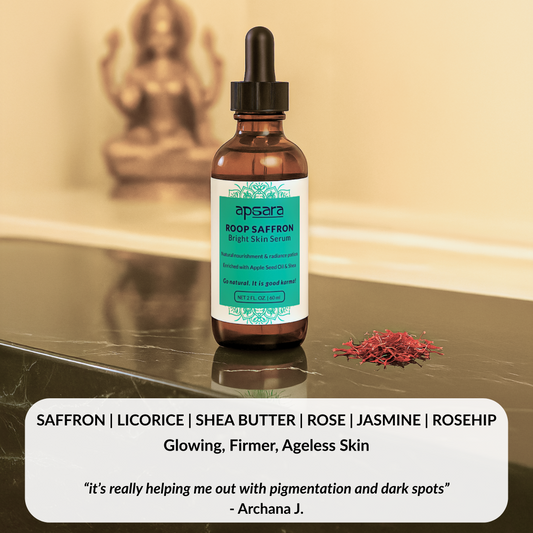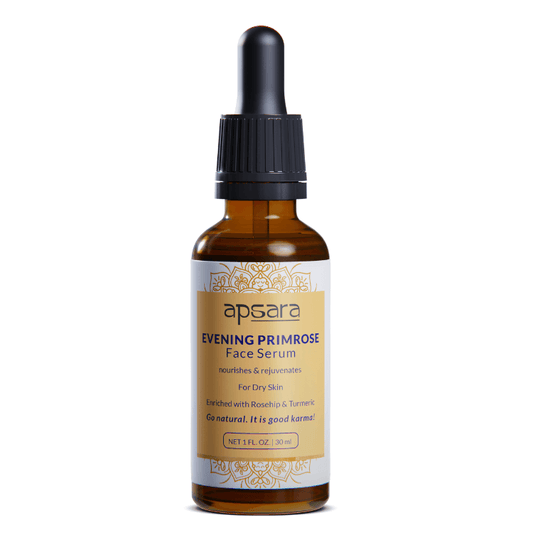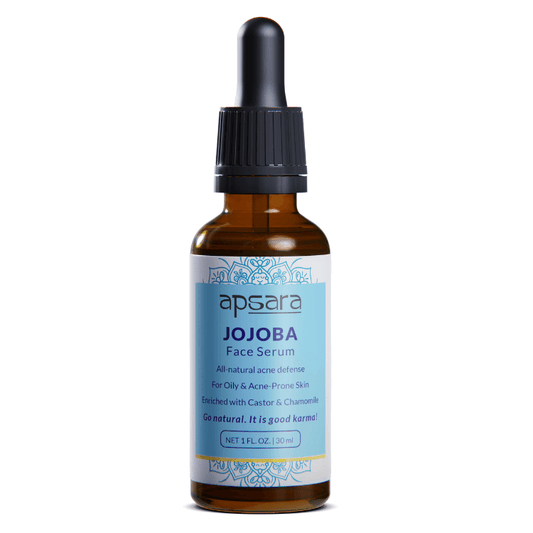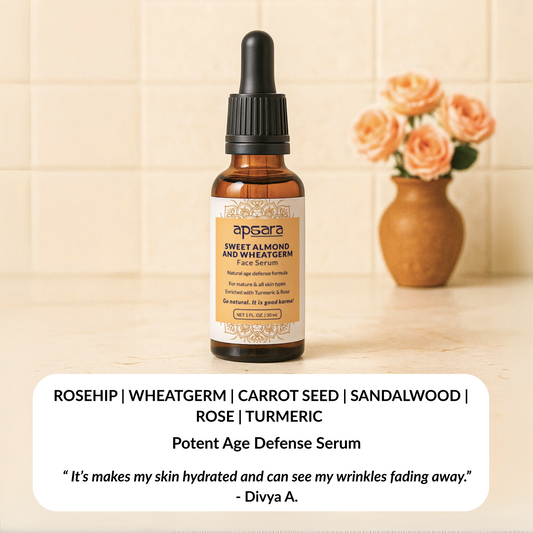
Above Sheetal Rawal. Scientist (human genetics) & Founder of Apsara Skin Care.
Do You Know Your Real Skin Type?
The Answer Could Change Your Skin Forever
Have you ever stood in front of the mirror wondering why one product seems to work beautifully for someone else—but leaves your skin feeling tight, greasy, irritated, or completely unchanged?
You're not alone.
One of the biggest reasons people struggle with their skin isn't because they aren't trying hard enough. It isn't because they haven't bought enough products. It isn't because they haven't discovered the newest ingredient trending on social media.
It's because they're using product for the wrong skin type.
In fact, many people spend years believing they have oily skin when they're actually dehydrated. Others assume they have dry skin when their skin is really combination. Some believe their skin is "sensitive" without realizing sensitivity is often only part of the story.
The truth is simple.
Healthy, ageless and glowing skin begins with knowing your real skin type.
Only then can you choose ingredients that help restore balance instead of creating more imbalance.
At Apsara Skin Care, I believe healthy skin isn't achieved through harsh treatments, invasive procedures, or chasing every viral skincare trend. It comes from understanding your skin, respecting its natural biology, and supporting it with carefully chosen botanical ingredients that have stood the test of time.
Let's discover what your skin has been trying to tell you all along.

Why Your Skin Type Matters More Than Any Product
Imagine taking medication for the wrong illness.
Even if it's an excellent medicine, it probably won't help—and may even make things worse.
The same principle applies to skincare.
A rich cream designed for dry skin may overwhelm oily skin. A cleanser made to reduce excess oil can strip already dry skin even further. Ingredients chosen without understanding your skin type often leave people frustrated, constantly switching products while wondering why nothing truly works.
Your skin is unique.
When you understand its natural tendencies, everything becomes easier:
-
Choosing the right cleanser
-
Selecting the right moisturizer
-
Picking the right serum
-
Preventing premature aging
-
Reducing breakouts
-
Creating long-term balance
The goal isn't to force your skin into submission.
The goal is to help it find its natural equilibrium.
Skin Type vs. Skin Problem. What is sensitive skin?
Before identifying your skin type, it's important to understand one of the biggest misconceptions in skincare.
Sensitive skin is not actually a skin type.
This surprises many people.
The four primary skin types are:
-
Normal
-
Dry
-
Combination
-
Oily (including acne-prone skin)
Sensitivity is different.
Sensitivity is a condition that can accompany any skin type.
For example:
-
Dry skin can also be sensitive.
-
Oily skin can be sensitive.
-
Combination skin can become sensitive.
-
Even normal skin can occasionally experience sensitivity.
Sensitivity often appears as:
-
Redness
-
Burning
-
Stinging
-
Easy irritation
-
Reactivity to products
-
Environmental sensitivity
Rather than replacing your skin type, sensitivity simply describes how reactive your skin has become.

Skin Type #1: Combination Skin
Combination skin is one of the most misunderstood skin types.
Many people assume they have oily skin simply because their forehead or nose becomes shiny.
But combination skin behaves differently.
Typically:
-
Oily T-zone
-
Normal or dry cheeks
-
Occasional breakouts
-
Some enlarged pores around the nose
-
Tightness after cleansing despite visible oil later
This happens because different areas of the face produce different amounts of sebum.
The mistake?
Treating the entire face as oily.
This often strips moisture from already normal or dry areas while encouraging the oily zones to produce even more oil in compensation.

What combination skin really needs
Balance.
Not aggressive oil removal.
Not heavy moisturizers.
Instead, combination skin thrives when nourished with lightweight botanical ingredients that support healthy moisture without clogging pores.
Ingredients like:
The goal is harmony—not extremes.

Skin Type #2: Dry Skin
Dry skin often feels uncomfortable.
You may notice:
-
Tightness after washing
-
Rough texture
-
Flaking
-
Fine lines appearing more obvious
-
Dull complexion
-
Lack of softness
Dry skin naturally produces less protective oil.
Without enough healthy lipids, moisture escapes more easily through the skin barrier.
Unfortunately, many people make dry skin worse by using foaming cleansers designed for oily skin.
The result?
Even more dryness.
Even more irritation.
Even more sensitivity.

What dry skin really needs
Nourishment.
Healthy botanical oils help replenish the skin's natural protective barrier.
Time-tested ingredients include:
-
Evening Primrose oil
-
Almond oil
-
Avocado oil
-
Rosehip oil
-
Shea butter
-
Sandalwood
-
Turmeric
These ingredients don't simply sit on the skin.
They help support moisture retention while providing antioxidants that defend against environmental stress.

Skin Type #3: Oily or Acne-Prone Skin
This skin type often gets the most aggressive treatment.
Unfortunately, that's exactly what usually makes it worse.
Oily skin naturally produces more sebum.
Common signs include:
-
Shine throughout the day
-
Enlarged pores
-
Frequent breakouts
-
Blackheads
-
Whiteheads
-
Congestion
Many people believe they should remove every trace of oil.
But skin is intelligent.
When stripped too aggressively, it often responds by producing even more oil.
It's a cycle many people unknowingly repeat for years.

What oily skin really needs
Gentle purification.
Not punishment.
Nature offers many remarkable ingredients that help clarify the skin while respecting its protective barrier.
Examples include:
-
Neem
-
Tea tree
-
Turmeric
-
Holy basil
-
Sandalwood
-
Clay
-
Aloe vera
Combined with proper hydration, these ingredients can help restore balance without excessive dryness.

Skin Type #4: Normal Skin
Normal skin doesn't necessarily mean perfect skin.
It simply means the skin naturally maintains a relatively healthy balance.
Characteristics often include:
-
Comfortable after cleansing
-
Minimal breakouts
-
Small pores
-
Healthy glow
-
Good elasticity
-
Neither excessively oily nor dry

Normal skin is often the easiest to maintain.
But it still benefits from thoughtful care.
Pollution, UV exposure, stress, aging, and seasonal changes can all gradually affect even healthy skin.
The goal becomes preservation.
Support the skin before problems appear.
Antioxidant-rich botanicals such as saffron, turmeric, licorice, wheatgerm oil, vitamin C-rich plant extracts, and rosehip oil help defend the skin against daily environmental stress.


What About Sensitive Skin?
Many people answer the question, "What is your skin type?" with one word:
Sensitive.
But here's the important distinction.
Sensitivity describes how your skin reacts, not how much oil it produces.
You can have:
-
Sensitive dry skin
-
Sensitive oily skin
-
Sensitive combination skin
-
Sensitive normal skin
Common triggers include:
-
Over-exfoliation
-
Nasty chemicals in skin care products
-
Harsh detergents
-
Strong fragrances
-
Excessive active ingredients
-
Environmental stress
-
Barrier damage
-
Hormonal imbalance
If your skin suddenly becomes sensitive, don't automatically assume you've developed a new skin type.
Instead, ask why your skin barrier is asking for help.
Why Trends Often Create Confusion
Every year skincare trends promise miracles.
Slugging.
Skin cycling.
Ten-step routines.
Acid layering.
Ice facials.
Strong exfoliants.
While some trends have merit in the right context, many people adopt them simply because they're popular—not because they're appropriate for their skin.
Healthy skin doesn't come from constantly shocking it.
It comes from consistency.
Nature has quietly provided remarkable skincare ingredients for thousands of years. Some ingredients that I persoanlly swear by are:
Turmeric.
Neem.
Saffron.
Rose.
Aloe vera.
Sandalwood.
Wheatgerm oil.
Rosehip oil.
These botanicals continue to earn their place not because they're fashionable, but because generations have trusted them for good reason—and modern scientific research increasingly supports many of their traditional uses.
Wise skincare isn't about following every trend.
It's about understanding your own skin.

Balance Is More Powerful Than Perfection
Your skin doesn't need to be perfect.
It needs to be balanced & protected. While natural oils like wheatgerm can nourish and balance the skin, antioxidants like those in turmeric and saffron, can minimize free radical damage and protect the skin from future oxidative deterioration. This creates a beautiful balance or nurture and defense.
Balanced skin is more resilient.
It retains moisture more effectively.
It heals more efficiently.
It tolerates environmental stress better.
This philosophy has guided traditional Ayurvedic skincare for centuries.
Instead of forcing the skin to behave differently, the goal is to gently encourage it back toward equilibrium.
That approach remains just as relevant today.
So...What Should You Use for Your Skin Type?
If you've ever searched:
-
What is my skin type?
-
How do I know my skin type?
-
What should I use for my skin type?
You're asking exactly the right questions.
The answer isn't one miracle ingredient.
It's choosing products formulated specifically for your skin's unique needs.
Look for routines built around:
-
Gentle cleansing
-
Deep nourishment
-
Antioxidant protection
-
Consistent hydration
-
Respect for the skin barrier
-
Time-tested natural ingredients supported by modern understanding
Skincare should never feel like a battle against your own skin.
It should feel like a partnership.

The Real Secret to Beautiful Skin
Knowing your real skin type is one of the most empowering things you can do for your skin.
Once you understand whether your skin is dry, oily, combination, or normal—and whether sensitivity accompanies it—you stop guessing.
You stop chasing trends.
You stop buying products simply because they're popular.
Instead, you begin making thoughtful, informed decisions rooted in both wisdom and science.
At Apsara Skin Care, I have always believed that nature offers extraordinary solutions when paired with careful formulation and a deep respect for the skin's own intelligence. My philosophy isn't about overwhelming your skin with harsh treatments or quick fixes. It's about helping restore balance through carefully selected botanical ingredients, consistency, and mindful self-care.
Because beautiful skin isn't created overnight.
It's cultivated—one wise decision at a time.
And perhaps the most important decision of all is answering one simple question honestly:
Do you really know your skin type?